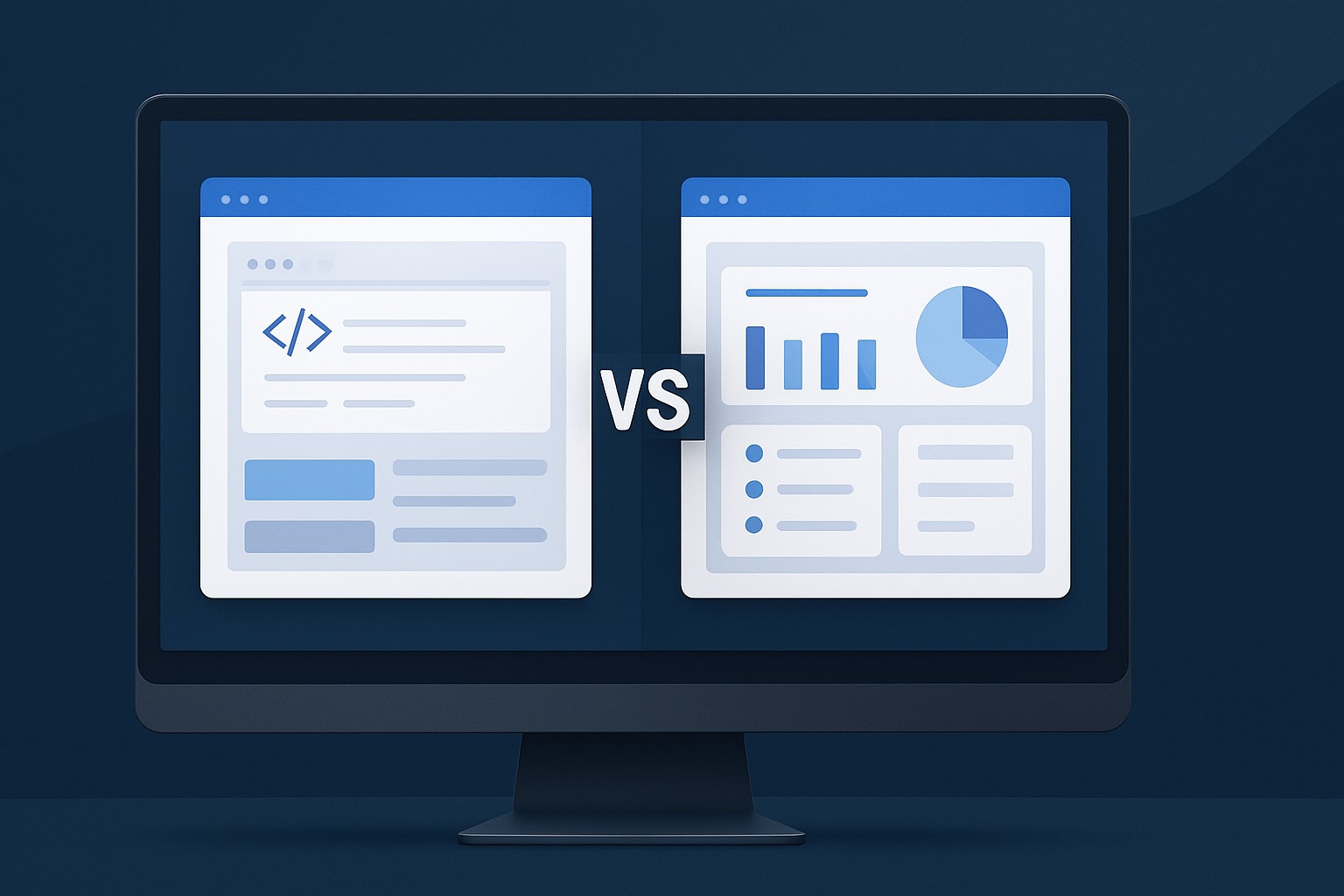
Legacy ASP.NET Web Forms applications remain a significant part of many Indian enterprises’ software portfolios. Despite their stability, these systems often struggle to keep pace with evolving business needs, user experience expectations, and security requirements. Modernizing legacy ASP.NET Web Forms is no longer just about technology upgrades—it’s a strategic move toward operational agility and cost efficiency.
Why Legacy ASP.NET Web Forms Modernization Matters
Many enterprises in India continue to rely on ASP.NET Web Forms applications built over a decade ago. These applications were cutting-edge in their time but now present challenges such as:
- Difficulty integrating with modern APIs and cloud services
- Limited support for responsive UI and mobile experiences
- Increasing maintenance overhead due to outdated frameworks and tooling
- Security vulnerabilities in legacy codebases
- Challenges in scaling and automating workflows
Addressing these challenges allows businesses to improve performance, reduce costs, and deliver better user experiences.
Common Modernization Approaches
Indian enterprises looking to modernize ASP.NET Web Forms typically consider three main paths:
- Incremental Refactoring: Gradually rewriting core components using modern .NET Core or .NET 6+ frameworks while maintaining legacy UI for continuity. This approach limits disruption but requires careful modular design and testing.
- Full Rewrite with Modern Frameworks: Rebuilding the application using MVC, Razor Pages, or Blazor to leverage modern UI paradigms, cloud readiness, and microservices architecture. This path offers the most flexibility but requires significant upfront investment.
- Encapsulation and API Integration: Wrapping legacy functionalities behind APIs and building new front-end layers, possibly with React or Angular. This hybrid approach balances risk and modernization speed.
Tradeoffs to Consider
- Cost vs. Speed: Full rewrites deliver lasting benefits but can be resource-intensive, while incremental updates reduce risk but may prolong technical debt.
- User Experience: Modern front-ends provide responsive, mobile-friendly interfaces, which legacy Web Forms lack.
- Security and Compliance: Modern frameworks have built-in security improvements aligning better with current standards and Indian regulatory requirements.
- Integration: New architectures simplify connecting with cloud services, AI workflows, and ERP systems common in Indian MSMEs and enterprises.
Practical Steps for Indian Enterprises
Successful modernization starts with a clear assessment and roadmap:
- Audit Existing Systems: Evaluate code quality, dependencies, and integration points. Identify bottlenecks and security gaps.
- Define Business Objectives: Align modernization with goals like improved productivity, enhanced reporting, or seamless mobile access.
- Choose the Right Technical Stack: For backend, consider ASP.NET Core or .NET 7+. For frontend, evaluate Blazor, React, or Angular based on team expertise and user needs.
- Plan Data Migration: Ensure database architecture supports scalability and performance; upgrade from legacy SQL servers or migrate to cloud-managed databases like PostgreSQL or Azure SQL.
- Phase Implementation: Use feature toggles and modular deployment to reduce risk and enable continuous delivery.
Comparison Table: Legacy ASP.NET Web Forms vs. Modernized Architectures
| Aspect | Legacy ASP.NET Web Forms | Modernized .NET Core / Blazor / React |
|---|---|---|
| UI/UX | Server-generated HTML, limited responsiveness, desktop-centric | Responsive, mobile-friendly, SPA or progressive web app |
| Performance | Stateful, page postbacks, higher latency | Client-side rendering, API-driven, asynchronous loading |
| Security | Older authentication models, fewer built-in protections | OAuth, OpenID Connect, CSRF/XSS mitigations, role-based access control |
| Maintainability | Monolithic codebase, tightly coupled components | Modular, microservices-friendly, CI/CD pipelines |
| Integration | Limited API support, complex interoperability | RESTful APIs, cloud service integration, AI automation ready |
| Scalability | Challenging to scale horizontally | Cloud-native, containerized deployments |
Frequently Asked Questions (FAQs)
- Is it necessary to rewrite the entire legacy application?
- Not always. Depending on business needs, incremental refactoring or API encapsulation may suffice and reduce costs.
- How do Indian MSMEs benefit from modernization?
- Modern solutions improve efficiency, enable integration with GST-compliant billing, automate workflows, and support remote access—key factors for MSMEs’ agility.
- What are the risks of delaying modernization?
- Risks include rising maintenance costs, security vulnerabilities, inability to meet regulatory compliance, and poor user experience leading to client dissatisfaction.
- Can legacy data be reused?
- Yes, with proper migration strategies and database upgrades, legacy data can be preserved and integrated into the new system.
The Laysan Technologies Action Plan
Legacy ASP.NET Web Forms modernization is a critical step for Indian enterprises aiming to stay competitive and compliant. Laysan Technologies Pvt. Ltd. offers tailored Lead-to-Ledger ERP automation, custom .NET Core application development, and secure cloud deployment solutions that facilitate seamless modernization projects. Bridge your operational gaps with scalable custom software engineering or ready-to-deploy software products. Schedule a strategic technology consultation with our enterprise architecture team at Laysan Technologies today to build, modernize, and scale your business applications securely.