For many Indian MSMEs, managing enterprise resource planning (ERP) systems efficiently is a balancing act between automation benefits and escalating operational costs—especially around AI-powered features. Many businesses rely heavily on third-party AI APIs, which can quickly balloon recurring expenses and pose data privacy risks. This is where local AI pipelines come in as a promising alternative, enabling sustainable ERP workflow automation that aligns with the unique needs and constraints of Indian MSMEs.
Understanding the Challenge: High Costs and Data Risks in AI-Enabled ERPs
Modern ERP systems increasingly incorporate AI for tasks like intelligent data extraction, automated report generation, or predictive inventory management. However, commercial AI services typically charge per API call or token usage, which can escalate costs unpredictably as your transaction volumes grow.
Besides cost, data security is a pressing concern. When sensitive business data passes through external AI APIs, it increases exposure risk, often conflicting with internal compliance or even emerging Indian data protection standards.
Local AI Pipelines: A Practical Solution for Indian MSMEs
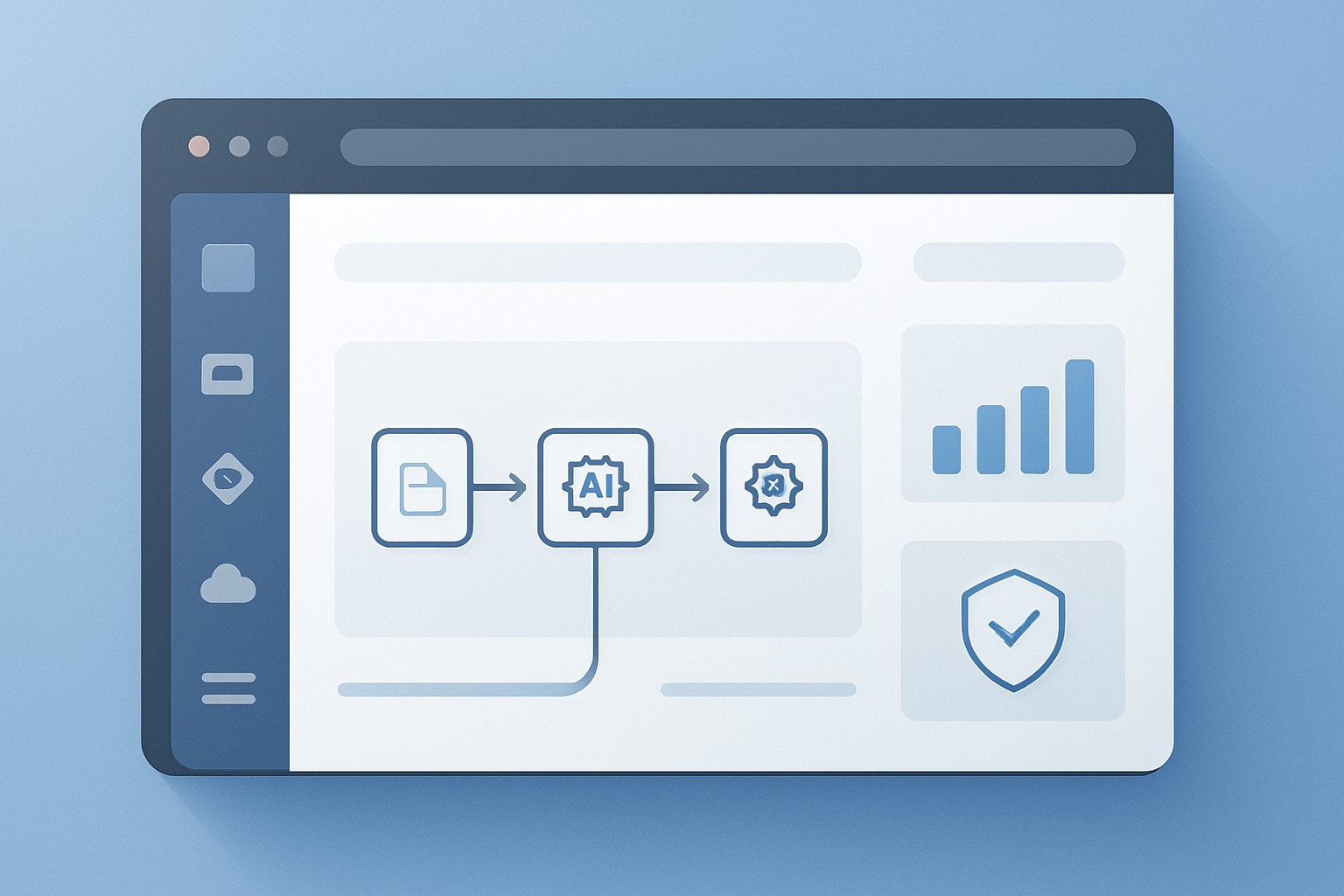
Local AI pipelines refer to deploying open-source AI models and workflows directly on your own hardware or secured cloud environments. This approach eliminates reliance on third-party paid APIs, significantly reducing ongoing expenses and tightly controlling data privacy.
By embedding AI capabilities inside custom-developed software frameworks, MSMEs can automate internal workflows such as:
- Automated invoice processing and billing reconciliation
- Smart HRMS data parsing and payroll calculations
- Inventory demand forecasting using tailored machine learning models
- On-screen evaluation and marking workflows for educational institutions
- Custom chatbots trained on company manuals for internal help desks
Comparing Legacy Manual Workflows and Local AI-Powered Automation
| Aspect | Legacy Manual Workflow | Local AI Pipeline Automation |
|---|---|---|
| Operational Cost | Labour-intensive, escalating salaries and overheads | One-time setup, minimal recurring AI processing costs |
| Data Security | Physical control but limited speed and error-prone | Secure in-house processing; avoids data leak risks |
| Processing Speed | Slow, dependent on human availability | Faster batch and real-time processing capabilities |
| Error Rate | Human errors common in repetitive tasks | Consistent accuracy with model fine-tuning |
| Scalability | Scaling requires proportional manpower increase | Scale AI pipelines with hardware upgrades, no linear cost rise |
Implementing Local AI Pipelines: Key Considerations
Getting started with local AI integration requires thoughtful planning and skilled execution. Important factors include:
- Hardware and Infrastructure: Choose servers or cloud setups capable of hosting AI models with sufficient processing power to handle expected workloads.
- Open-Source AI Models: Select well-supported models that fit your specific automation needs, such as natural language processing or image recognition.
- Custom Software Integration: Local AI is most effective when embedded in ERP or workflow software tailored to your processes, ensuring seamless data flow and UI experience.
- Data Privacy Compliance: Maintain strict access controls and data encryption to protect sensitive organizational information.
- Ongoing Maintenance: AI systems require model updates and performance monitoring to sustain accuracy and efficiency.
FAQ: Common Questions About Local AI Pipelines for ERP Automation
- Q: Will local AI pipelines work for small-scale MSMEs?
A: Yes. While initial setup requires investment, the reduction in recurring API fees and enhanced data control make it a viable long-term solution, even for smaller businesses. - Q: Can local AI pipelines support multiple ERP modules?
A: Absolutely. Modular AI components can be integrated across billing, HRMS, inventory, and more, enabling broad automation coverage. - Q: Is specialized expertise required to manage local AI setups?
A: Some technical skills are needed for deployment and maintenance, but partnering with experienced technology firms can bridge this gap efficiently. - Q: How do local AI pipelines affect data privacy?
A: Local processing avoids sending data to third parties, greatly reducing exposure risks and improving compliance with data protection norms.
The Laysan Technologies Action Plan
Indian MSMEs aiming to reduce ERP operational costs and strengthen data security should consider transitioning from costly external AI APIs to local AI pipeline automation. Laysan Technologies Pvt. Ltd. offers customized Lead-to-Ledger ERP automation solutions and secure enterprise AI integration services designed to embed open-source AI workflows within your infrastructure.
Bridge your operational gaps with scalable custom software engineering or ready-to-deploy software products. Schedule a strategic technology consultation with our enterprise architecture team at Laysan Technologies today to build, modernize, and scale your business applications securely.