Indian MSMEs face growing pressure to modernize operations while managing costs and securing sensitive data. Embedding local AI pipelines directly into ERP systems is emerging as a practical solution to automate workflows efficiently without the recurring expenses or security risks that come with cloud-based AI APIs.
Understanding the Challenge: Manual ERP Processes vs. Automated AI Workflows
Traditional ERP systems in many MSMEs still rely heavily on manual data entry, siloed databases, and batch processes. Business functions such as billing, inventory management, HRMS, and payroll processing often involve repetitive tasks prone to human error and delays.
Comparing the legacy manual workflow with an AI-powered automated workflow highlights the transformative potential:
| Workflow Aspect | Legacy Manual ERP Process | AI-Driven Automated ERP Process |
|---|---|---|
| Data Entry | Manual input by staff, high error rate | Automated data capture and validation with AI parsing |
| Inventory Tracking | Periodic stock checks, delayed updates | Real-time inventory updates via AI-enabled sensors and automation |
| Payroll Calculation | Manual computation, prone to discrepancies | AI-driven automated payroll processing with compliance checks |
| Reporting | Static reports generated monthly | Dynamic, AI-generated insights and forecasting |
| Cost | High labor costs, error correction overhead | Reduced operational costs, minimal human intervention |
| Data Security | Data shared with third-party APIs, potential exposure | Local AI pipelines ensure data remains on-premise and secure |
Why Local AI Pipelines Matter for Indian MSMEs
Many Indian MSMEs hesitate to adopt AI-powered ERP enhancements due to concerns over recurring cloud API fees and data privacy, especially in sectors handling sensitive financial or HR data. Deploying open-source AI models locally—within their own IT infrastructure—helps them overcome these barriers.
- Cost Control: Eliminates ongoing costs linked to third-party AI APIs, enabling predictable budgeting.
- Data Privacy: Keeps critical business data on-premises, safeguarding against data leaks or compliance issues.
- Performance: Local processing reduces latency and dependence on internet connectivity, crucial for remote or network-limited setups.
Integrating Local AI with Existing ERP Systems
MSMEs often run legacy ERP platforms developed in PHP frameworks like Laravel or CodeIgniter, .Net Core, or MERN stack. Embedding AI pipelines requires:
- Assessing current ERP modules for automation opportunities (billing, inventory, payroll, service booking).
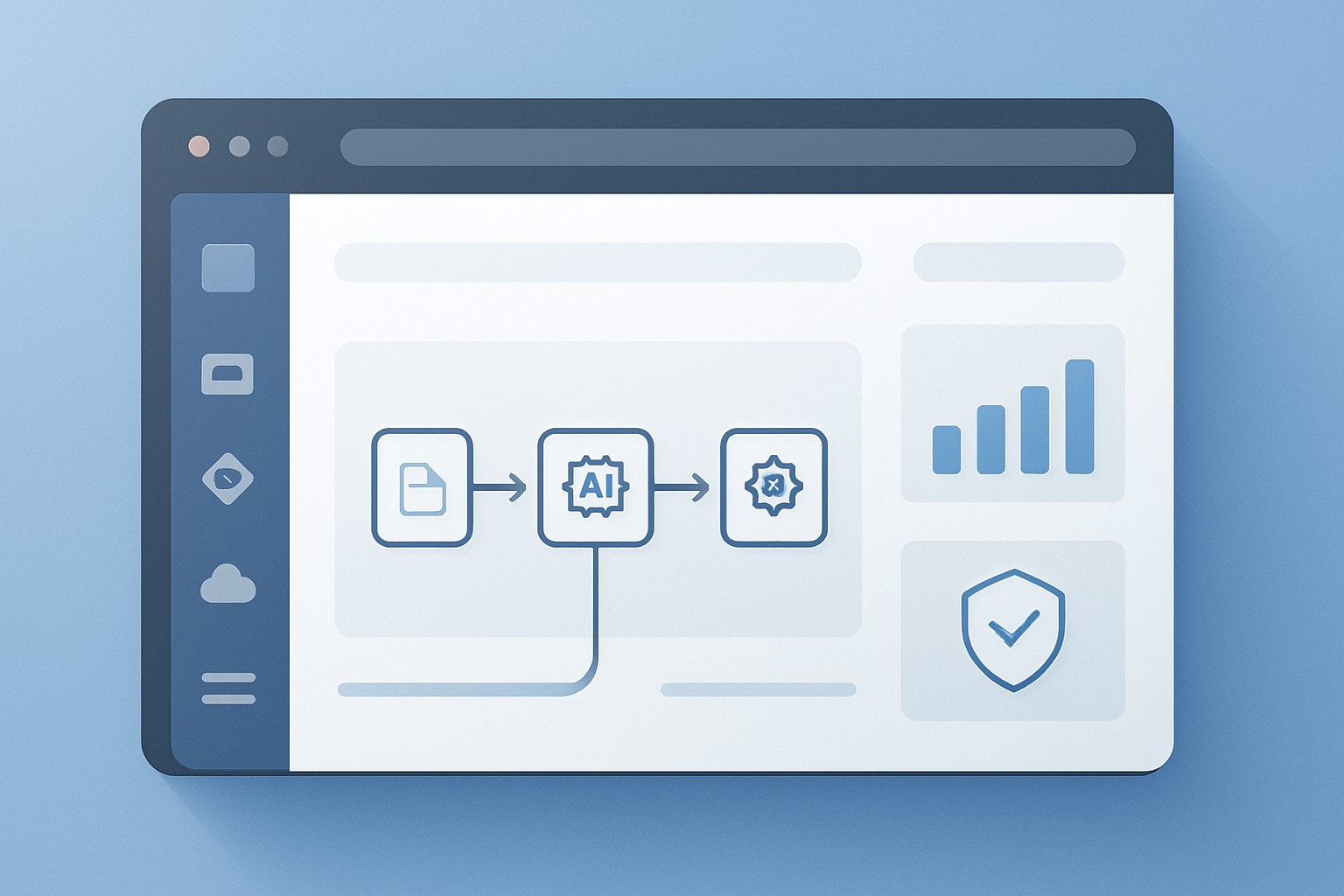
- Deploying modular open-source AI models tailored to business logic (NLP for document parsing, predictive analytics for inventory demand).
- Creating API layers or microservices to integrate AI with existing ERP databases and front-end UI.
- Training AI models locally on proprietary business data to improve accuracy and relevance.
This approach avoids costly wholesale ERP replacements and allows gradual, controlled automation upgrades.
Case Example: Automating Billing and Payroll with Local AI
An Indian manufacturing MSME was facing delays in generating accurate bills and payroll errors due to manual processing. By integrating a local AI pipeline within their custom .Net ERP, Laysan Technologies helped automate invoice generation, reconcile inventory deductions automatically, and run payroll with automated attendance data from their biometric system.
Resulting benefits included:
- 50% reduction in billing cycle time.
- Near elimination of payroll errors.
- Zero dependency on expensive AI API subscriptions.
- Enhanced data security with all processing on local servers.
Practical Takeaways for MSME Decision Makers
- Evaluate your ERP processes to identify repetitive or error-prone tasks suitable for automation.
- Consider local AI integration as a cost-effective alternative to cloud AI services.
- Partner with software providers experienced in open-source AI and ERP customization, preferably with India market expertise.
- Plan for incremental deployment to minimize disruption and maximize user adoption.
- Ensure compliance with Indian data protection norms by keeping critical data processing in-house.
FAQ: Local AI Pipelines and ERP Automation
- What are local AI pipelines?
- Local AI pipelines are AI models and workflows deployed and run within an organization’s own IT infrastructure, avoiding external cloud API calls.
- How do local AI pipelines reduce operating costs for MSMEs?
- They eliminate recurring fees charged by cloud AI providers, lowering ongoing expenses.
- Can local AI pipelines be integrated with existing ERP systems?
- Yes, through API integrations or modular microservices, local AI can augment legacy ERP platforms without full replacement.
- Is data security better with local AI?
- Yes, since sensitive data never leaves the company’s secure network, reducing exposure risk.
- What skill sets are required for implementing local AI in ERP?
- Expertise in AI model training, software architecture, and ERP customization—often involving technologies like PHP, .Net, MERN stack, and open-source AI frameworks.
Bridge your operational gaps with scalable custom software engineering or ready-to-deploy software products. Schedule a strategic technology consultation with our enterprise architecture team at Laysan Technologies today to build, modernize, and scale your business applications securely. Our expertise spans local AI pipeline integration, custom ERP automation, and secure on-premise AI workflows tailored for Indian MSMEs.