Indian MSMEs face unique operational challenges—from managing inventory and payroll to handling billing and customer service. Off-the-shelf software often misses local nuances or proves too generic, leading to inefficiencies and lost opportunities. In 2026, custom ERP (Enterprise Resource Planning) solutions combined with workflow automation are becoming essential tools for MSMEs seeking to streamline operations and maintain agility in a competitive market.
Why Generic Software Falls Short for Indian MSMEs
Many MSMEs initially adopt standard accounting or inventory software that promises quick setup. However, these solutions rarely account for critical local factors such as regional tax compliance, multi-location stock transfers, or sector-specific billing formats. This mismatch leads to manual workarounds, data duplication, and errors that undermine operational efficiency.
Moreover, generic platforms often rely heavily on recurring API calls to third-party services for functions like reporting or notifications, increasing ongoing costs and risking data exposure.
The Business Case for Custom ERP and Automation
A tailor-made ERP system can integrate and automate core activities such as billing, HRMS, payroll, inventory, barcode printing, and service booking workflows into a unified platform. For Indian MSMEs, this means better control over processes, fewer errors, and faster turnaround times.
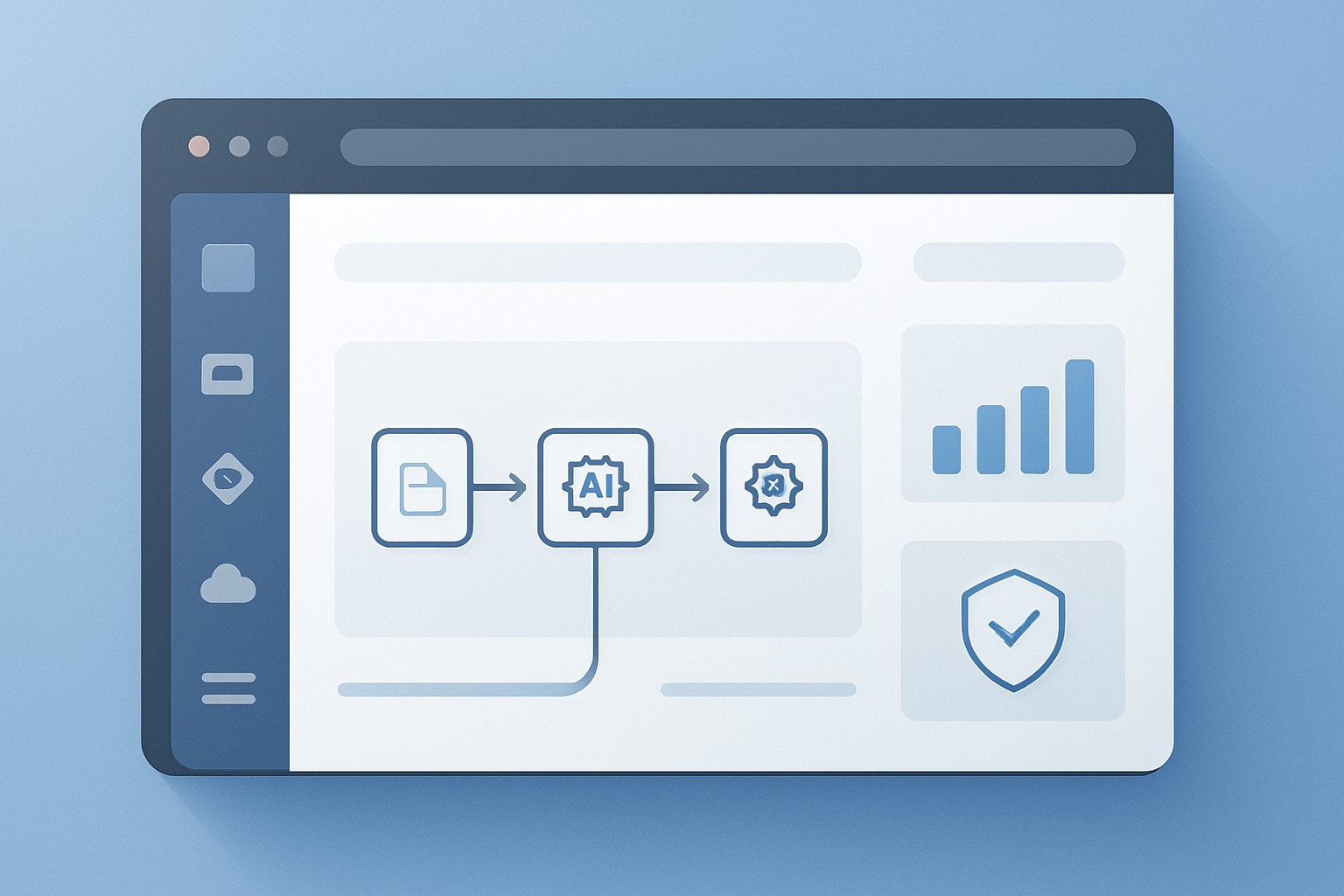
Automation further reduces manual intervention in repetitive tasks like invoice generation, attendance tracking, or inventory replenishment alerts. Embedding local AI pipelines or rule-based engines directly into the software can also eliminate dependence on expensive external APIs, protecting sensitive data and cutting costs.
Legacy Manual Workflows vs Automated Custom ERP Workflows
| Aspect | Legacy Manual Workflow | Automated Custom ERP Workflow |
|---|---|---|
| Data Entry | Manual inputs across spreadsheets and disconnected systems, prone to errors | Centralized data capture with validation, reducing duplication and mistakes |
| Billing Process | Manual invoicing, delayed dispatch, and inconsistent formats | Automated invoice generation with integrated tax compliance and instant dispatch |
| Inventory Management | Periodic stock checks, manual reorder triggers | Real-time inventory tracking with auto-replenishment alerts and barcode integration |
| Payroll & Attendance | Paper-based attendance, manual salary calculations | Digital attendance capture with automated payroll processing and compliance reporting |
| Data Security | Scattered data, higher risk of exposure and loss | Centralized, secure data storage with role-based access and audit trails |
| Cost Structure | High manual labor cost, hidden inefficiencies | Reduced operational cost via automation and in-house hosted workflows without recurring API fees |
Practical Steps for MSMEs Considering Custom ERP
- Assess Core Pain Points: Identify workflows causing delays or errors—billing, HR, inventory, or customer service.
- Choose Flexible Tech Stacks: Options like PHP with Laravel, .Net Core, or MERN stack enable scalable, maintainable solutions tailored to your business rules.
- Prioritize Local Compliance: Ensure the software handles GST, regional taxes, and statutory reporting suitably.
- Integrate Automation Modules: Incorporate attendance via CCTV face matching, barcode scanning for inventory, and AI-based intelligent data extraction where possible.
- Plan For Data Security: Host sensitive workflows locally with encrypted databases and restrict third-party API exposure.
FAQs: Custom ERP and Automation for Indian MSMEs
- Q: How long does it take to implement custom ERP for an MSME?
A: Depending on complexity, initial deployment can take 3-6 months with incremental feature rollout. - Q: Is custom ERP cost-effective compared to off-the-shelf software?
A: Custom ERP may have higher upfront costs but offers better ROI via reduced errors, automation savings, and scalability. - Q: Can automation reduce compliance risks?
A: Yes, automated tax calculations and real-time reporting help MSMEs stay audit-ready and compliant. - Q: How to ensure data privacy when using AI in workflows?
A: Deploy open-source, locally hosted AI pipelines within your secure infrastructure to keep data in-house and minimize exposure.
The Laysan Technologies Action Plan
Bridge your operational gaps with scalable custom software engineering or ready-to-deploy software products. Schedule a strategic technology consultation with our enterprise architecture team at Laysan Technologies today to build, modernize, and scale your business applications securely. Our expertise spans end-to-end ERP automation, AI-driven workflow integration, and secure local hosting tailored for Indian MSMEs.